With 10 Techniques to Cultivate Self-Awareness Through Meditation at the forefront, get ready to dive deep into the world of self-discovery and mindfulness. Picture this – a serene setting, calming music, and your mind ready to explore new horizons. Let’s unravel the mysteries of self-awareness through meditation together!
Now, let’s explore how meditation can unlock the doors to a better understanding of ourselves and those around us.
Discuss the importance of self-awareness in personal development.

Self-awareness plays a crucial role in personal development as it allows individuals to have a deeper understanding of themselves, their thoughts, emotions, and behaviors. By being self-aware, individuals can identify their strengths, weaknesses, values, and beliefs, which are essential for personal growth and self-improvement.
Self-awareness leads to better decision-making
- Self-aware individuals are more conscious of their goals, values, and priorities, allowing them to make decisions that align with their true selves.
- By understanding their emotions and thought patterns, individuals can make rational and well-thought-out decisions, reducing impulsive actions.
- Self-awareness helps individuals recognize their biases and prejudices, enabling them to make more objective decisions.
Self-awareness improves relationships with others, 10 Techniques to Cultivate Self-Awareness Through Meditation
- Being self-aware allows individuals to communicate effectively, express their needs and boundaries, and understand the perspectives of others.
- Self-awareness fosters empathy and compassion, leading to more meaningful and authentic relationships with others.
- By recognizing their own triggers and emotional responses, individuals can navigate conflicts and disagreements with others in a constructive manner.
Self-awareness enhances emotional intelligence
- Self-awareness is the foundation of emotional intelligence, as it involves recognizing and managing one’s emotions effectively.
- Individuals with high emotional intelligence can regulate their emotions, empathize with others, and build stronger interpersonal relationships.
- Self-awareness enables individuals to respond to challenging situations with resilience and adaptability, leading to overall emotional well-being.
Explain the concept of meditation and its role in cultivating self-awareness.

Meditation is a practice that involves focusing the mind and eliminating distractions to achieve a state of mental clarity and emotional calmness. It plays a crucial role in cultivating self-awareness by allowing individuals to observe their thoughts, emotions, and sensations without judgment. Through regular meditation, individuals can develop a deeper understanding of themselves, their behaviors, and their reactions to various situations.
Different Meditation Techniques for Self-Reflection
- Body Scan Meditation: Involves focusing on different parts of the body to bring awareness to physical sensations and emotions.
- Walking Meditation: Practiced by focusing on each step and being mindful of movements and surroundings.
- Mantra Meditation: Involves repeating a word or phrase to focus the mind and cultivate self-awareness.
Comparison of Mindfulness Meditation with Loving-Kindness Meditation for Self-Awareness
- Mindfulness Meditation: Focuses on being present in the moment, observing thoughts and sensations without attachment or judgment.
- Loving-Kindness Meditation: Involves cultivating feelings of love, compassion, and kindness towards oneself and others to increase self-awareness and empathy.
Examples of How Meditation Can Increase Self-Awareness in Daily Life
- Improved Emotional Regulation: Meditation helps individuals recognize and regulate their emotions effectively in daily interactions.
- Enhanced Decision-Making: By increasing self-awareness, meditation enables individuals to make conscious and informed decisions aligned with their values and goals.
- Stress Reduction: Practicing meditation regularly can help individuals become more aware of stress triggers and adopt healthier coping mechanisms.
Explore 10 specific meditation techniques to enhance self-awareness.

Meditation is a powerful tool for increasing self-awareness and understanding our inner selves. By practicing different meditation techniques, we can cultivate a deeper sense of self-awareness and mindfulness in our daily lives.
Body Scan Meditation Method
Body scan meditation involves focusing on each part of the body sequentially, starting from the toes and moving up to the head. This technique helps to bring awareness to physical sensations, tensions, and emotions stored in different body parts. By practicing body scan meditation regularly, individuals can develop a deeper connection between their mind and body, enhancing overall self-awareness.
Breath Awareness Meditation
Breath awareness meditation focuses on observing the natural flow of breath without trying to control it. This technique helps individuals to stay present in the moment, improve mindfulness, and enhance self-reflection. By paying attention to the breath, one can observe their thoughts, emotions, and sensations without judgment, leading to a better understanding of themselves.
Gratitude Meditation
Gratitude meditation involves reflecting on things in life that we are grateful for. By acknowledging and appreciating the positive aspects of our lives, we can shift our perspective and cultivate a sense of self-awareness. Practicing gratitude meditation regularly can help individuals become more aware of their blessings, strengths, and values, leading to a more positive outlook on life.
Examine the relationship between mindfulness and self-awareness during meditation.
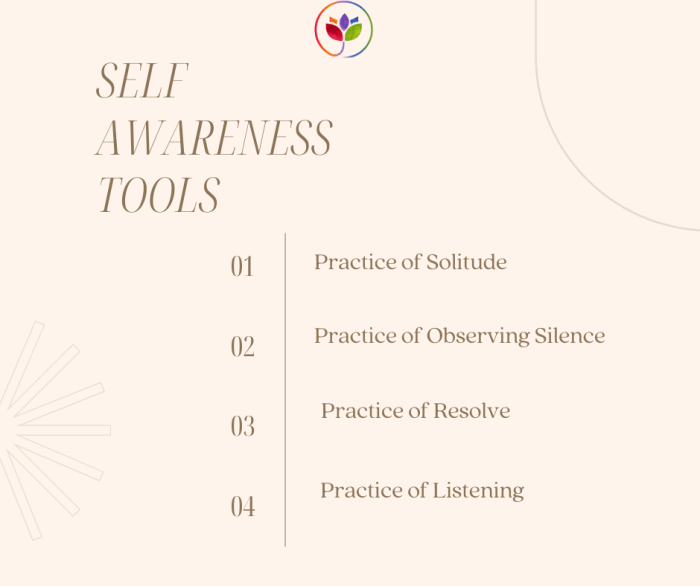
Mindfulness and self-awareness are closely intertwined concepts that play a crucial role in meditation practice. By cultivating mindfulness during meditation, individuals can deepen their self-awareness and develop a greater understanding of their thoughts, emotions, and behaviors.
How mindfulness practice helps individuals become more self-aware.
- When practicing mindfulness during meditation, individuals learn to observe their thoughts and feelings without judgment or attachment. This non-reactive awareness allows them to become more attuned to their inner experiences and gain insight into patterns of behavior.
- By staying present in the moment and focusing on their breath or bodily sensations, individuals can increase their self-awareness by becoming more conscious of their internal states and responses to external stimuli.
Compare and contrast the effects of focused-attention meditation and open-monitoring meditation on self-awareness.
- Focused-attention meditation involves concentrating on a single point of focus, such as the breath or a mantra. This type of meditation can enhance self-awareness by training individuals to sustain their attention and notice when their mind wanders, thus increasing mindfulness.
- Open-monitoring meditation, on the other hand, encourages individuals to observe their thoughts and emotions as they arise without getting caught up in them. This practice helps individuals develop a broader awareness of their mental processes and promotes self-reflection.
Discuss the role of self-compassion in developing self-awareness through mindfulness.
- Self-compassion is an essential component of mindfulness practice that involves treating oneself with kindness, acceptance, and understanding. By cultivating self-compassion during meditation, individuals can develop a more compassionate and non-judgmental attitude towards themselves, which in turn fosters greater self-awareness.
- When individuals practice self-compassion, they are more likely to approach their thoughts and emotions with curiosity and empathy, leading to a deeper understanding of their inner experiences and a heightened sense of self-awareness.
Final Summary: 10 Techniques To Cultivate Self-Awareness Through Meditation

As we conclude our exploration of 10 Techniques to Cultivate Self-Awareness Through Meditation, remember that the journey to self-awareness is a continuous process. Embrace each moment with mindfulness and compassion, and watch how it transforms your life for the better.